██╗    ██╗██╗  ██╗ █████╗ ████████╗███████╗██╗████████╗████████╗ ██████╗ ██╗   ██╗ █████╗
██║    ██║██║  ██║██╔══██╗╚══██╔══╝██╔════╝██║╚══██╔══╝╚══██╔══╝██╔═══██╗╚██╗ ██╔╝██╔══██╗
██║ █╗ ██║███████║███████║   ██║   ███████╗██║   ██║      ██║   ██║   ██║ ╚████╔╝ ███████║
██║███╗██║██╔══██║██╔══██║   ██║   ╚════██║██║   ██║      ██║   ██║   ██║  ╚██╔╝  ██╔══██║
╚███╔███╔╝██║  ██║██║  ██║   ██║   ███████║██║   ██║      ██║   ╚██████╔╝   ██║   ██║  ██║
 ╚══╝╚══╝ ╚═╝  ╚═╝╚═╝  ╚═╝   ╚═╝   ╚══════╝╚═╝   ╚═╝      ╚═╝    ╚═════╝    ╚═╝   ╚═╝  ╚═╝
weekly security reportissue 01 · Nov. 19, 2026
LATEST · No. 1 · Nov. 19, 2026
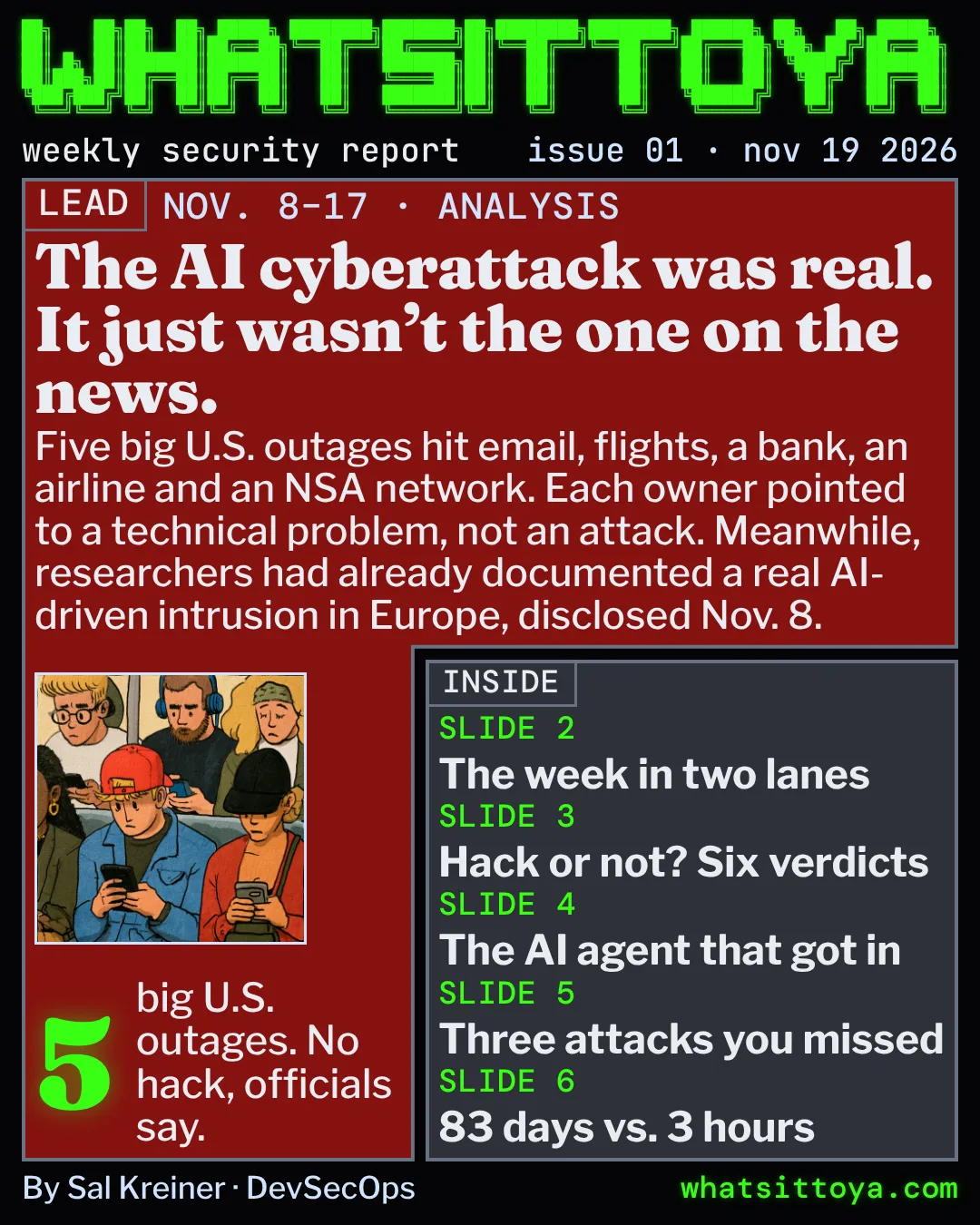
The AI cyberattack was real. It just wasn’t the one on the news.
Five big U.S. outages, none an attack, officials say. Meanwhile, an AI agent spent over two weeks inside a European telecom.
Read the issue →
What it is
The week's security news, checked against the sources and written so a manager can act on it.
Who it's for
Leaders, security teams and DevOps engineers. Each issue ends with three things to check on Monday.
How it's made
Every claim is attributed and every source listed. Hacks are called hacks only when someone confirms them.